

News | Academic Conference
2026 International Conference on Intelligent Systems Control, Optimization and Applications (ISCOA 2026) Successfully Concludes
Chengdu, Sichuan · October 2026
The 2026 International Conference on Intelligent Systems Control, Optimization and Applications (ISCOA 2026) has successfully concluded in Chengdu, Sichuan. Focusing on frontier topics in intelligent system control, optimization methods, and engineering applications, the conference was hosted by Sichuan University and organized by the School of Electronic Information Engineering, Sichuan University.
Experts, scholars, and young researchers from universities and research institutes at home and abroad gathered to explore theoretical innovation and engineering practice in intelligent control, covering nonlinear dynamical systems, networked intelligent control, robotics and multi-agent coordination, and complex system optimization. The conference attracted approximately 200 on-site and online participants.
The opening ceremony was chaired by Professor Tu Zhengwen of Chongqing Three Gorges University of Science and Technology. On behalf of the organizing committee, Professor Tu extended a warm welcome and sincere gratitude to the leaders, experts, and colleagues in attendance. Professor Liu Changjun, Vice Dean of the School of Electronic Information Engineering at Sichuan University, and Professor Yang Xinsong, Conference Chair, delivered opening remarks.
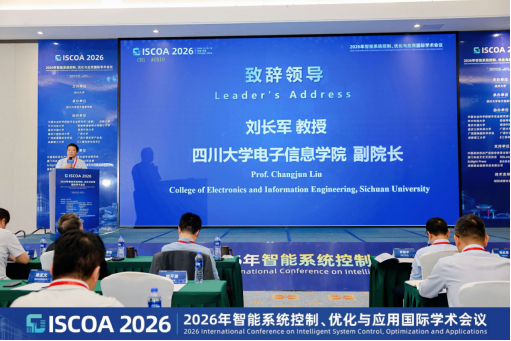
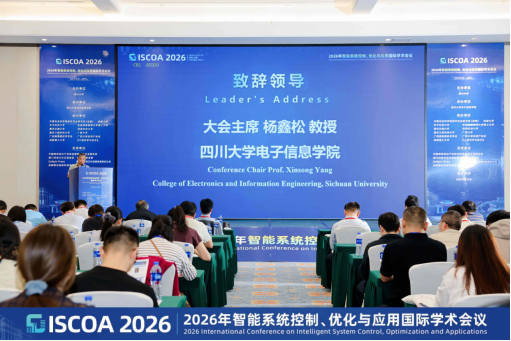
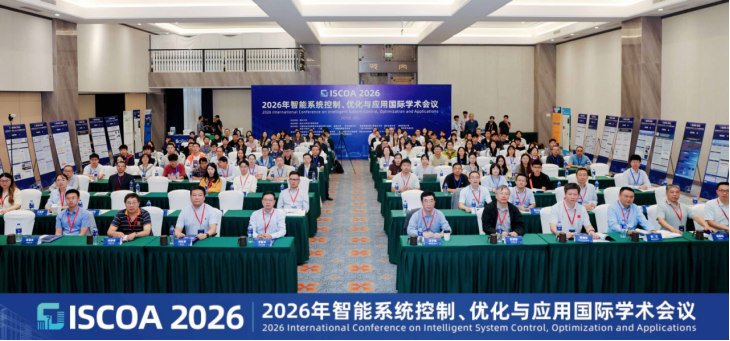
Afterwards, all guests and delegates gathered for a group photo, capturing this moment of international academic exchange.
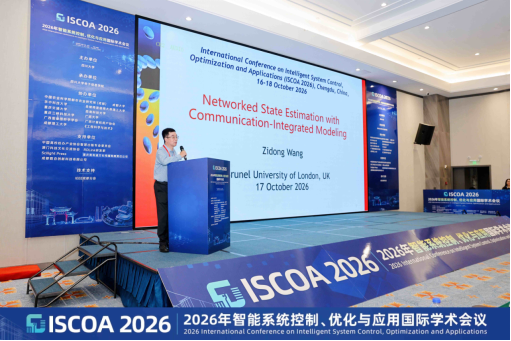
The morning keynote session was opened and chaired by Professor Huang Darong of the School of Artificial Intelligence, Anhui University. Professor Wang Zidong from Brunel University London shared “Networked State Estimation under Integrated Communication Modeling,” and Professor Su Housheng from Huazhong University of Science and Technology presented “Intelligent State Interval Observation and Cooperative Consensus Control for Multi-Agent Systems.”
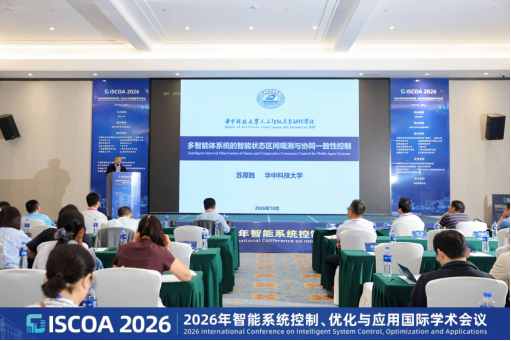
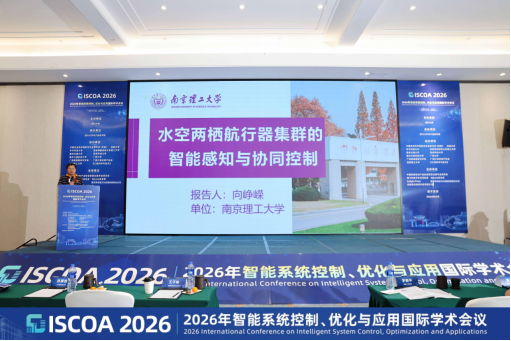
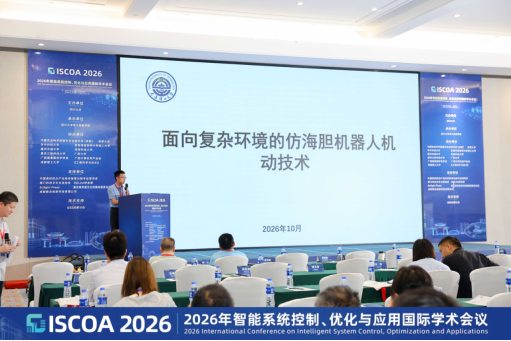
After the tea break, the session was chaired by Professor Qin Sitian, Dean of the School of Science, Harbin Institute of Technology (Weihai). Professor Xiang Zhengrong from Nanjing University of Science and Technology presented “Intelligent Perception and Cooperative Control of Amphibious Unmanned Vehicle Swarms,” and Professor Zhao Xudong from Dalian University of Technology shared “Maneuvering Technology of Sea-Urchin-Inspired Robots in Complex Environments.” The reports addressed networked state estimation, cooperative consensus control of multi-agent systems, swarm perception and cooperation of unmanned vehicles, and robot maneuvering in complex environments. Q&A sessions followed each talk, generating lively on-site discussion.
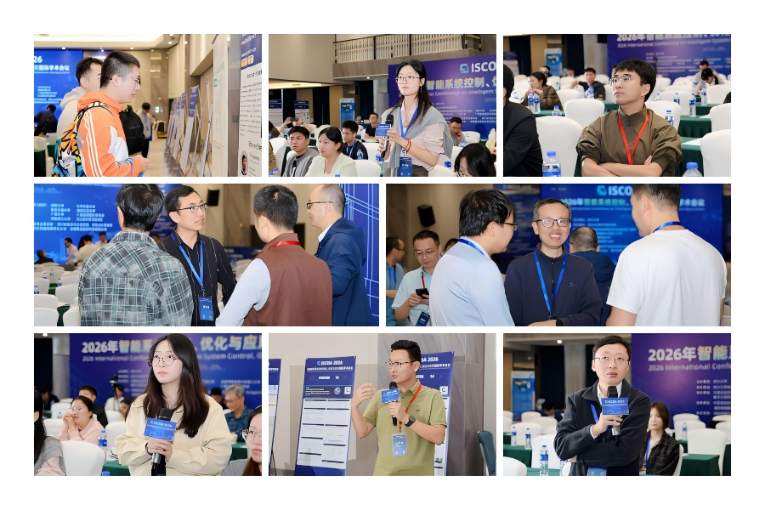
In the afternoon, the academic atmosphere remained strong. Four thematic sessions and multiple oral presentations covered intelligent optimization algorithms, event-triggered control, multi-manipulator coordination, integrated energy scheduling for mines, and synchronization of reaction-diffusion neural networks. A number of poster papers were also displayed and reviewed on site by conference experts. The tea break provided ample space for cross-team exchange. During the conference, faculty and students from more than ten universities, research institutes, and related organizations across multiple provinces and regions actively participated in oral presentations, demonstrating broad academic engagement and laying a solid foundation for future inter-university and inter-team collaboration.
The award ceremony and closing ceremony were chaired by Professor Xiong Jiang, Dean of the School of Mathematics and Statistics, Chongqing Three Gorges University of Science and Technology. Professor Yang Xinsong, Conference Chair, delivered the closing summary. Awards presented on site included the Best Session Organization Award, Outstanding Paper, Outstanding Oral Presentation, and Outstanding Poster.
The successful hosting of ISCOA 2026 effectively promoted academic exchange and the collision of ideas in intelligent control, gathered frontier wisdom, clarified disciplinary trends, and provided an important platform for theoretical research and joint talent cultivation. Moving forward, all parties will continue to deepen research collaboration and advance technological innovation. We look forward to meeting colleagues again at next year’s ISCOA conference.